Golf, Baseball, Raking – Overuse of the Elbow – Ouch!

Golfers elbow, or medial epicondylitis, much like tennis elbow (lateral epicondylitis), is caused by the repeated movement of the palm toward the forearm applying a strain on the inner tendons and muscles attached to the inner part of the elbow bones (wrist flexors), causing pain. If the flexors are overused, it causes inflammation. Although called golfers elbow, medial epicondylitis is however not confined to golfers. Actually, a lot of people suffer from it without ever playing golf. It is common among people over using their arm doing different activities, such as painting, raking, typing, turning doorknobs, picking something up with the palm down, even shaking hands, and can be worsened by opening a jar.  The causes of golfers elbow can occur through a direct injury to the inner elbow. Sometimes when this happens, the muscles can partially tear. It can also be caused by a neck injury causing referred pain.  Treatment should include rest, ice, and physiotherapy. Take the pressure off and reduce the pain – wear a support/brace.  There are many different types of golfers elbow braces available.  Counterforce braces are generally straps worn 1 to 3 inches below the elbow. Another style is a full elbow compression sleeve, with a strap to tighten around the forearm. The braces help reduce tension on the painful tendons. You can wear the braces either during activities that cause pain, such as golfing or throughout the day.

Consider making a no obligation appointment with one of our Certified Brace Specialists to show you the options available.  Our goal is to understand your problem, educate you on non-invasive solutions and come up with a plan that will minimize your pain, maximize your mobility, and provide long term gain.

Submitted by Jen Estabrooks, Co-owner, General Manager, Soles in Motion, 133 Baker Drive, Dartmouth 902-468-7911 (solesinmotion.ca)

Enjoy the Summer!

Skiing and Snowboarding season is here!

skiing-and-snowboarding-injuries

These popular winter sports are a great way to stay active.  Although the incidence of injury in both skiing and snowboarding is relatively similar, on the body where these injuries occur are considerably different. Skiers tend to injure the lower extremity – most commonly the knee – while snowboarders are more likely to injure their backs and upper extremity – specifically areas such as the wrist.

The most common knee injuries in skiing are the MCL (medial collateral ligament) and ACL (anterior cruciate ligament).  They occur for different reasons based on the skier’s skill level, the most common being when the knee tilts inwards and the lower leg is forced forwards. This often happens during a fall or when catching an edge.  Preventing knee injuries when skiing is multifactorial. With the pediatric and youth skier, appropriate strength is required before jumping into ski boots. This also is true for the adult skier. Areas of specific focus should be in the hip stabilizers, knee stabilizers, hamstrings and lower back.  Knee braces are designed to prevent injury during skiing and provide support and stability after an injury to keep you on the slopes.  There are several different kinds of knee braces for ligament protection – light weight, designed to fit with ski boots, provide the highest level of twisting and lateral movement.

The most common snowboard injury is the wrist.  The upper body is used to help generate turning forces on the board. In the event of a loss of balance and a subsequent fall, the instinctive reaction of a snowboarder is to outstretch a hand to try and break their fall. This mechanism is commonly known as an ‘FOOSH’ ( Fall Onto an Out Stretched Hand).  There are wrist braces designed to provide maximum protection for the wrist while allowing a range of motion to match your needs.  Made of carbon fiber, they are incredibly strong and are designed for high impact sports.

Soles in Motion services and products are an excellent solution for everyone who wants to be healthier, more active and in less pain.  Whether you want to ski, skate or do your daily chores.  Our team works together to implement the best solution for you.  Soles in Motion also offers a 30-day free trial program on our Osteoarthritis hip and knee braces to make sure they are going to work for you before you commit to purchase.  We are dedicated to making sure our products work.

Are your Feet tired of hurting!

are-your-feet-tired-of-hurtingThere can be many reasons why your feet hurt – improper footwear, not enough support in the right places, not enough cushioning, medical condition or an injury.  It is hard to know where to start.  The best option is to see a Canadian Certified Pedorthist for an assessment.  Assessments determine what the problem is and what solution would be best for you.  You may require custom orthotics, off the shelf insoles or proper footwear.  Be educated!  Listen to your feet!
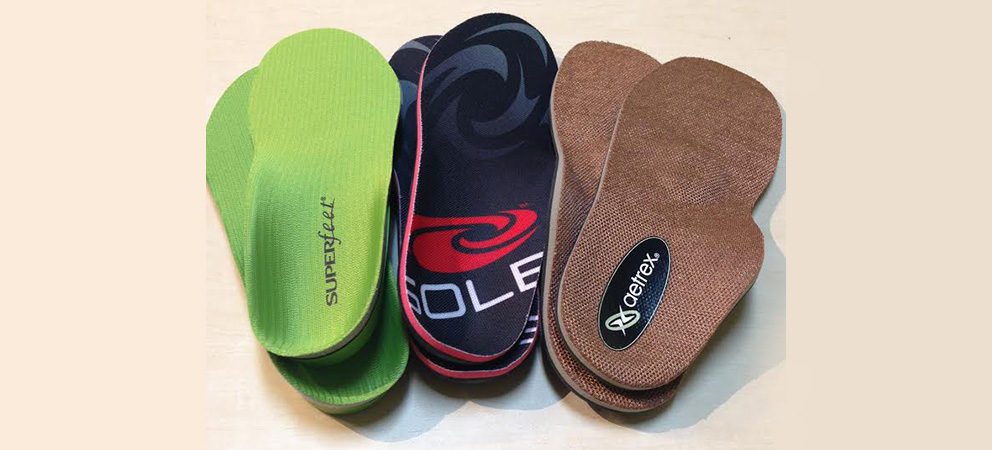
Custom-made orthotics provide individual correction specific for your foot problem. There are different types of orthotics. Functional orthotics are used to correct problems with a person’s foot mechanics such as overpronation (the foot rolls inward) or supination (the arch is too high and the foot rolls outward) Accommodative orthotics are designed to fit and protect the foot generally from where it functions via cushioning and specific unloading and to relieve pain and pressure in the foot. They improve tolerance for the weight bearing tasks of daily life and typically used with diabetic patients.

Generally speaking, your feet should NOT hurt. Pain indicates that something is wrong. Come in and see us at Soles in Motion and experience how we come up with the right solution for your individual needs.

Submitted by Jen Estabrooks, Co-owner, General Manager, Soles in Motion, 121 Ilsley Avenue soon to be moving to 133 Baker Drive, Dartmouth 902-468-7911 (solesinmotion.ca)

Happy Walking!

I am a diabetic. What foot problems should I be worried about?

There are two main conditions that can affect diabetic feet:

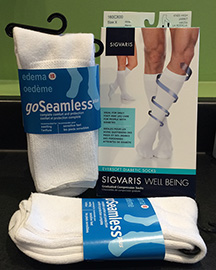
go-seamless-imageFirst, with damage to the nervous system, a person with diabetes may not be able to feel his or her feet properly. Normal sweat secretion and oil production that lubricates the skin of the foot is impaired. These factors together can lead to abnormal pressure on the skin, bones, and joints of the foot during walking and can lead to breakdown of the skin and subsequently sores may develop.

The second issue is that damage to blood vessels and impairment of the immune system can make it difficult to heal these wounds on diabetic feet. Because of the poor blood flow, antibiotics cannot get to the site of the infection easily.

The best treatment for the foot issues is prevention.

  • Control your blood sugar as this is the only way to prevent all of the diabetic complications.
  • Regular Foot Exams: Diabetics should get into the routine of daily foot self-examinations and also after any foot trauma, no matter how minor.
  • Foot Care: Proper foot care for diabetics is very important. Wear seamless socks made of materials that wick moisture away from your feet.
    • Soles in Motion has a foot care nurse that provides diabetic foot care can be a great resource to show you how to properly care for your feet and educate you about ways to prevent serious problems.
  • Proper Footwear: Poorly fitting shoes are a common cause of diabetic foot problems.
    • Diabetics should wear sturdy, comfortable shoes with socks whenever possible to protect your feet.
    • Never walk barefoot, even indoors.
    • Always check the insides of your shoes before putting them on.
    • Diabetic footwear should have a high, wide toe box; removable insoles to be able to insert orthotics if necessary, rocker soles to reduce pressure in the areas of the foot most susceptible to pain (such as the ball-of-the-foot) and firm heel counters for support and stability.
  • Orthotics: For diabetics with flat feet, bunions, corns/calluses or hammertoes you may orthotics to be sure that there is no pressure being placed on certain parts of your feet. By customizing the orthotic to your foot, the insert will provide the best comfort and protection.
  • Soles in Motion also specializes in diabetic socks and footwear designed to fit properly.

Soles in Motion offers no obligation assessments with our two Canadian Certified PedorthistsCall and make an appointment – Education is free!!!